Bali Waterfalls Guide: Best Waterfalls in Bali, Routes, Safety Tips & Hidden Gems
Bali’s Real Magic Often Begins Where the Road Gets Narrow
Bali’s beaches get the postcards. Its waterfalls get the gasps.
One minute, you are passing rice fields, roadside temples, and sleepy villages. The next, you are walking down stone steps slick with mist, hearing the jungle grow louder with every turn. Then the trees open, the air cools, and there it is: water falling through a green canyon, sunlight catching the spray, everyone suddenly speaking more softly.
That is the thing about Bali waterfalls. They are not just places to take a photo. They are little journeys into the island’s interior — some easy and polished, others muddy, steep, wild, and completely worth the effort.
This Bali waterfalls guide is built for real travelers, not just people collecting Instagram locations. You will find the best waterfalls near Ubud, the dramatic giants of North Bali, lesser-known jungle pools, safety advice, route ideas, budget notes, timing tips, and honest guidance on which waterfalls are actually worth your day.
Quick Answer: What Are the Best Waterfalls in Bali?
The best waterfalls in Bali include Sekumpul Waterfall for dramatic jungle scenery, Banyumala Twin Waterfalls for swimming, Tibumana Waterfall for an easy Ubud-area visit, Tegenungan Waterfall for accessibility, Tukad Cepung Waterfall for cave light beams, Kanto Lampo Waterfall for photography, Aling-Aling Waterfall for adventure activities, Gitgit Waterfall for a classic North Bali stop, Nungnung Waterfall for power and height, and Munduk Waterfall for a cooler mountain escape.
For most first-time visitors, the best waterfall route is Tibumana, Kanto Lampo, Tukad Cepung, and Tegenungan from Ubud. For travelers who want Bali’s most spectacular waterfall day, go north for Sekumpul and Banyumala Twin Waterfalls.
Best Bali Waterfalls at a Glance
| Waterfall | Best For | Region | Difficulty | Swimming |
|---|---|---|---|---|
| Tegenungan Waterfall | Easy access, first-timers | Gianyar, near Ubud | Easy to moderate | Sometimes |
| Tibumana Waterfall | Calm jungle pool | Bangli, near Ubud | Easy | Often |
| Kanto Lampo Waterfall | Photos and cascades | Gianyar | Easy to moderate | Wade/photo spot |
| Tukad Cepung Waterfall | Cave light beams | Bangli | Moderate | Not ideal |
| Suwat Waterfall | Quieter Ubud-area stop | Gianyar | Easy | Often |
| Nungnung Waterfall | Powerful tall waterfall | Badung | Moderate to hard | Not usually |
| Leke Leke Waterfall | Romantic hidden-gem feel | Tabanan | Easy to moderate | Limited |
| Sekumpul Waterfall | Most dramatic scenery | North Bali | Moderate to hard | Sometimes |
| Banyumala Twin Waterfalls | Swimming and scenery | North Bali | Easy to moderate | Limited |
| Gitgit Waterfall | Classic Bali waterfall | North Bali | Easy to moderate | Limited |
| Aling-Aling Waterfall | Cliff jumps and slides | North Bali | Moderate | With guide in activity areas |
| Munduk Waterfall | Cool mountain atmosphere | North Bali | Easy to moderate | Limited |
| Banyu Wana Amertha | Multiple cascades | North Bali | Moderate | Sometimes |
| Fiji Waterfall | Remote jungle adventure | North Bali | Harder | Sometimes |
1. Tegenungan Waterfall: Best Easy Waterfall Near Ubud
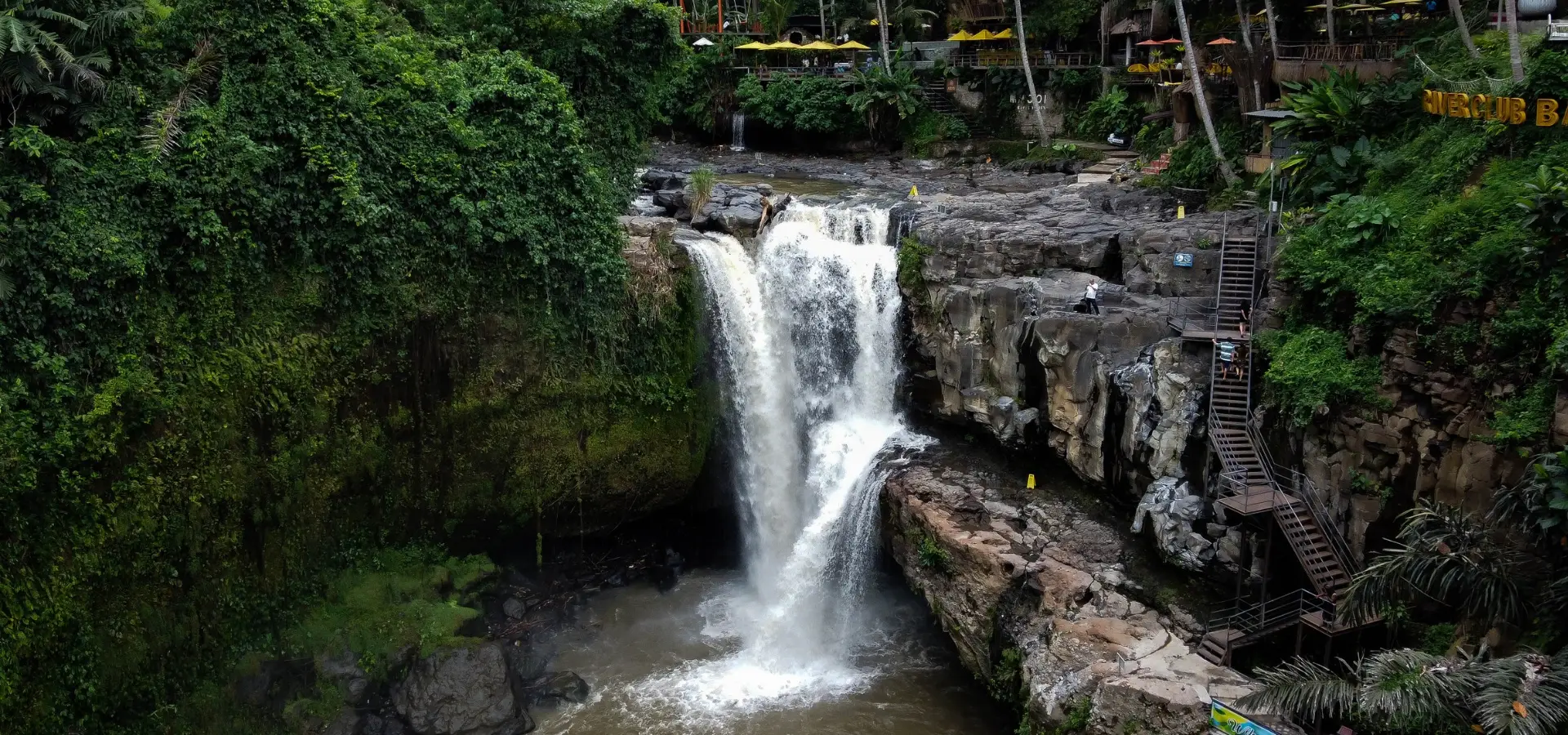
Tegenungan is one of the most visited waterfalls in Bali, and for good reason. It is close to Ubud, easy to combine with other attractions, and dramatic enough to feel like a proper jungle waterfall without requiring a full expedition.
The waterfall drops into a wide river valley surrounded by greenery, with viewpoints near the entrance and steps leading down toward the base. It is popular, commercial, and often busy, but it remains a strong choice for first-time visitors who want a convenient waterfall experience.
Why Visit Tegenungan Waterfall?
Tegenungan works well when you are short on time. You can visit in the morning from Ubud, pair it with Goa Gajah, Sukawati Art Market, or a rice-field lunch, and still return before afternoon traffic gets heavy.
It is also one of the better waterfalls for travelers who do not want a difficult trek. There are stairs, but the access is more developed than many remote waterfalls in North Bali.
Best Time to Visit
Go early in the morning before the crowds and heat arrive. Late afternoon can also be atmospheric, but mornings are better for a calmer visit.
Insider Tip
Do not assume the pool is always safe for swimming. After heavy rain, the water can become powerful and murky. Enjoy the viewpoint, check conditions, and follow local signs.
2. Tibumana Waterfall: Best for a Calm Jungle Swim Near Ubud
Tibumana is smaller than Tegenungan, but it often feels more graceful. A narrow curtain of water falls into a round pool framed by jungle walls, creating the kind of quiet scene people hope to find in Bali.
It is close enough to Ubud for a half-day trip, yet it feels softer and less hectic than the island’s most famous waterfalls. The walk down is manageable, and the setting is especially beautiful in the morning.
Why Tibumana Is Worth Visiting
Tibumana is one of the best waterfalls near Ubud for travelers who want a peaceful swim and a photogenic setting without committing to a long drive. It is not a secret anymore, but it still has a gentler mood than many headline attractions.
Best For
Couples, families with older children, solo travelers, first-time visitors, and anyone building an easy Ubud waterfall route.
Insider Tip
The water colour changes with rain and season. Do not expect the pool to look bright blue every day. Bali’s waterfalls are natural places, not edited postcards.
3. Kanto Lampo Waterfall: Best for Waterfall Photos
Kanto Lampo is one of Bali’s most photogenic cascade waterfalls. Instead of one straight drop, water slides over dark rock steps, creating a wide, textured curtain where travelers often stand or sit for photos.
It is close to Ubud and easy to combine with Tibumana and Goa Rang Reng. The final section can be slippery, so water shoes or secure sandals are useful.
What Makes Kanto Lampo Different?
Kanto Lampo is more of a photo-and-wade waterfall than a classic swimming waterfall. The beauty is in the rock formations, the shallow riverbed, and the way the water spreads across the stone.
Local guides are often available near the base and can help visitors move safely on the wet rocks. They may also help take photos, which is useful if you want the classic Kanto Lampo angle.
Best Time to Visit
Morning is best. It gets crowded quickly because it is accessible and visually striking.
Common Mistake
Wearing smooth flip-flops. The rocks are wet, uneven, and slippery. Proper footwear makes a big difference.
4. Tukad Cepung Waterfall: Best Cave Waterfall in Bali
Tukad Cepung is not the biggest waterfall in Bali, but it has one of the most memorable entrances. You walk down steps, pass through a narrow canyon, and reach a cave-like chamber where sunlight streams from above when the timing is right.
This is the waterfall people visit for atmosphere: dark rock walls, shafts of light, mist, and that sudden reveal at the end of the path.
Why Tukad Cepung Feels Special
Most Bali waterfalls are open jungle scenes. Tukad Cepung feels enclosed and theatrical. The waterfall drops inside a rock formation, and the light can create a magical effect between mid-morning and late morning on clear days.
Best Time to Visit
The best window is usually around 9:00 AM to 11:00 AM, when sunlight is most likely to enter the cave area. Arrive earlier if you want fewer people; arrive within the light window if photography is your priority.
Best For
Photographers, first-time visitors, couples, and travelers who want something different from the usual jungle pool.
Insider Tip
Do not visit after heavy rain. Canyon waterfalls can become risky when water levels rise, and the path can get slippery quickly.
5. Suwat Waterfall: Best Underrated Waterfall Near Ubud
Suwat is one of those waterfalls that quietly improves an itinerary. It is not as famous as Tegenungan, not as dramatic as Sekumpul, and not as unusual as Tukad Cepung. But it is close to Ubud, easy to reach, and often calmer than the bigger-name stops.
The waterfall falls into a natural pool surrounded by rock and greenery. It has a simple local feel, and the short walk makes it a good option if you want a relaxed stop without burning half the day.
Why Add Suwat to Your Route?
Suwat pairs well with Tibumana, Kanto Lampo, or Goa Gajah. It is also a good backup if you want to avoid the heavier crowds at Tegenungan.
Best For
Travelers staying in Ubud, couples, relaxed explorers, and anyone who prefers smaller, less chaotic waterfalls.
Insider Tip
Bring cash for entrance and parking. Smaller waterfall sites often do not rely heavily on card payments.
6. Nungnung Waterfall: Best for Raw Power
Nungnung is not gentle. It is tall, loud, misty, and intense. The waterfall crashes into a gorge with serious force, and the atmosphere feels wilder than many of the easy-access waterfalls near Ubud.
The catch is the stairs. You descend a long staircase to reach the base, which means the return climb can feel much harder than the way down. Still, for travelers who want a powerful waterfall without going all the way to North Bali, Nungnung is a rewarding choice.
Why Visit Nungnung Waterfall?
Nungnung gives you scale. The spray, sound, and height make it feel more dramatic than most waterfalls within day-trip distance of Ubud or South Bali.
Best For
Active travelers, photographers, adventure-minded couples, and visitors who do not mind a workout.
Insider Tip
Do not plan Nungnung as a casual add-on after several other stops. Give it proper time, bring water, and save energy for the climb back up.
7. Leke Leke Waterfall: Best Hidden-Gem Feel Without Going Too Remote
Leke Leke has become more popular in recent years, but it still gives many travelers that “secret jungle waterfall” feeling. A slim stream drops through a green rock opening, surrounded by vines, moss, and forest.
The path is relatively manageable, though it can be muddy after rain. The setting is especially appealing for couples and photographers because the waterfall has a clean, vertical composition that feels almost designed for a travel magazine cover.
Why Leke Leke Is Worth the Detour
It sits in a useful location between central Bali and the Bedugul area, making it easy to combine with Ulun Danu Beratan Temple, Jatiluwih Rice Terraces, or a North Bali route.
Best For
Couples, photographers, slow travelers, and anyone looking for a quieter waterfall with strong visual appeal.
Insider Tip
Go early and avoid white shoes. The trail can get muddy, and the best experience comes before the day tours arrive.
8. Banyumala Twin Waterfalls: Best Waterfall in Bali for Swimming
Banyumala Twin Waterfalls is one of North Bali’s most rewarding waterfall experiences. Two streams fall into a wide natural pool, surrounded by dense greenery and cool mountain air. It feels peaceful, scenic, and refreshing in a way that makes you want to stay longer than planned.
Compared with Sekumpul, Banyumala is easier to manage. The walk is shorter, the atmosphere is calmer, and the pool is one of the better waterfall swimming spots in Bali when conditions are safe.
Why Banyumala Is a Must-Visit
Banyumala gives you the beauty of North Bali without the full physical challenge of Sekumpul. It is especially good if you are staying near Munduk, Bedugul, Lovina, or Wanagiri.
Best Time to Visit
Morning is ideal, especially if you want calmer water and fewer people. The air in this region is cooler than South Bali, so bring a light layer if you are starting early.
Best For
Swimmers, couples, families with older children, photographers, and North Bali road-trippers.
Insider Tip
Pair Banyumala with Wanagiri viewpoints, Ulun Danu Beratan Temple, or Munduk for a full mountain day.
9. Sekumpul Waterfall: Best Waterfall in Bali for Big Scenery
Sekumpul is often described as the most beautiful waterfall in Bali, and this is one of those travel clichés that feels fair. It is not just one waterfall. It is a jungle amphitheatre of tall cascades dropping through the forest, with mist rising from the valley and greenery swallowing the cliffs.
It is also not effortless. Reaching the lower viewpoints and base can involve stairs, paths, river crossings, and a local guide depending on the route you choose. The reward is one of the most cinematic natural scenes on the island.
Viewpoint or Trek?
Sekumpul can be experienced in different ways:
- Viewpoint only: Best for travelers with limited mobility or time.
- Medium trek: Usually includes closer views of Sekumpul and nearby falls.
- Long trek: Often includes Sekumpul, Hidden Waterfall, Fiji Waterfall, and a deeper jungle route.
Prices and package rules vary locally, so confirm exactly what is included before paying.
Best For
Adventure travelers, photographers, fit couples, nature lovers, and repeat Bali visitors.
Insider Tip
Leave early. From Ubud or South Bali, Sekumpul is a long day. Staying overnight in Munduk, Lovina, or North Bali makes the experience far less tiring.
10. Fiji Waterfall: Best Add-On for Serious Sekumpul Travelers
Fiji Waterfall is often visited as part of the longer Sekumpul route. It is more remote, less casual, and better suited to travelers who want a proper jungle adventure rather than a quick photo stop.
The falls are tall and beautiful, but the main reason to go is the journey: forest paths, river crossings, village scenery, and the feeling of moving deeper into North Bali’s green interior.
Who Should Visit Fiji Waterfall?
Choose Fiji if you are already planning the long Sekumpul trek and have enough energy for a more demanding route. Skip it if you are short on time, traveling with very young children, or not comfortable on wet and uneven paths.
Insider Tip
Wear shoes that can get wet. This is not a dry, polished sightseeing route.
11. Gitgit Waterfall: Best Classic North Bali Waterfall
Gitgit is one of Bali’s classic waterfalls and has been a known tourist stop for decades. Located in North Bali near Singaraja, it offers a tall forest waterfall with a more established trail and local stalls along the route.
It may not feel as wild as Sekumpul or as serene as Banyumala, but it is convenient, scenic, and easy to combine with other North Bali stops.
Why Visit Gitgit?
Gitgit is a good choice if you want a North Bali waterfall without committing to a difficult trek. It fits naturally into a route that includes Bedugul, Lovina, Munduk, or Sekumpul.
Best For
First-time North Bali visitors, families with older children, photographers, and travelers looking for a classic waterfall stop.
Insider Tip
If you dislike souvenir-stall approaches, go early and keep the visit simple. The waterfall itself is worth seeing, but the area can feel more touristic than remote.
12. Aling-Aling Waterfall: Best for Adventure, Cliff Jumps, and Natural Slides
Aling-Aling is not just one waterfall experience. It is part of the Sambangan waterfall area in North Bali, where visitors can see a tall sacred waterfall and continue to nearby adventure spots such as Kroya, Kembar, and Pucuk.
This is the waterfall area for travelers who want more than looking. With a local guide and the right conditions, you can try natural slides and cliff jumps in designated sections.
Important Safety Note
The main Aling-Aling waterfall is often treated with respect as a sacred site, and adventure activities are usually done at nearby waterfalls in the Sambangan area. Do not jump or slide without a local guide. Conditions change quickly, and the rocks can be dangerous.
Best For
Adventure travelers, groups of friends, confident swimmers, and visitors staying in North Bali.
Insider Tip
Book the guided activity package if you want to jump or slide. It costs more than simple viewing, but the guide is part of the safety system.
13. Munduk Waterfall: Best for Cool Mountain Atmosphere
Munduk feels different from the Bali many travelers first meet. The air is cooler, the roads curve through cloves and coffee, and the landscape feels greener, quieter, and more spacious.
Munduk Waterfall is one of several waterfall stops in the area. It is not the biggest on the island, but the setting is beautiful and the region itself is worth the journey.
Why Visit Munduk?
Munduk is ideal for travelers who want to slow down. Instead of rushing in and out, stay overnight, walk between waterfalls, visit coffee farms, and watch the mist settle over the hills.
Best For
Slow travelers, couples, hikers, photographers, and anyone looking for a cooler alternative to South Bali.
Insider Tip
Pack a light rain jacket. Munduk’s mountain climate can shift quickly, even outside peak rainy season.
14. Banyu Wana Amertha: Best for Multiple Cascades in One Stop
Banyu Wana Amertha is one of North Bali’s most underrated waterfall areas. Instead of one single waterfall, you get several cascades within one natural setting, with soft streams falling over green rock and forest walls.
It is less famous than Sekumpul and often calmer than Banyumala, making it a strong choice for travelers who want beauty without the biggest crowds.
Why It Belongs in This Bali Waterfalls Guide
Banyu Wana Amertha is especially good for photographers because the cascades have a delicate, layered look. It feels lush, quiet, and less rushed than some of the more heavily promoted waterfall stops.
Best For
Photographers, couples, slow travelers, and North Bali explorers.
Insider Tip
Visit together with Banyumala or Wanagiri if you are already in the area.
15. Goa Rang Reng Waterfall: Best Spiritual and Local Waterfall Stop
Goa Rang Reng is not the most famous waterfall in Bali, but it has a different character. The water flows over broad rock rather than dropping as a single dramatic curtain, and the nearby cave area has spiritual significance.
Because of the terrain and local context, this is a place to approach respectfully. A local guide can be helpful, especially if you want to understand where to walk and what areas to avoid.
Best For
Travelers who have already seen the main Ubud waterfalls, culture-minded visitors, and those who prefer less obvious stops.
Insider Tip
Do not treat sacred spaces as photo sets. Move slowly, follow local guidance, and be mindful of ceremonies or offerings.
Best Waterfalls Near Ubud
If you are staying in Ubud, you do not need to travel all the way to North Bali for a good waterfall day. Several excellent waterfalls sit within day-trip distance.
Best Ubud-Area Waterfall Route
A strong one-day route from Ubud could include:
- Tibumana Waterfall
- Kanto Lampo Waterfall
- Tukad Cepung Waterfall
- Tegenungan Waterfall
This gives you a mix of swimming, photography, canyon scenery, and a classic big-name waterfall. Start early and do not rush. Four waterfalls in one day is enough.
Best Easy Waterfall Near Ubud
Choose Tibumana for a calmer experience or Tegenungan for the easiest big-name visit.
Best Hidden Waterfall Near Ubud
Choose Suwat or Goa Rang Reng if you want something less obvious than the main tour circuit.
Best Waterfalls in North Bali
North Bali is where the island’s waterfall scene becomes more serious. The drives are longer, the landscapes are cooler and greener, and the waterfalls feel bigger, wilder, and more rewarding.
Best North Bali Waterfall Route
For a full North Bali waterfall day, consider:
- Banyumala Twin Waterfalls
- Sekumpul Waterfall
- Fiji Waterfall if you choose the longer trek
A gentler alternative:
- Gitgit Waterfall
- Munduk Waterfall
- Banyumala Twin Waterfalls
Should You Stay Overnight in North Bali?
Yes, if you have the time. Staying in Munduk, Lovina, or near Bedugul makes waterfall trips easier and more enjoyable. It also lets you start earlier, avoid the worst traffic, and experience a quieter side of Bali.
Best Time to Visit Bali Waterfalls
The best time to visit Bali waterfalls is usually during the dry season from April to October, when paths are less slippery and water conditions are generally easier to manage. That said, waterfalls can look more powerful during or after the rainy season.
The trade-off is safety. Heavy rain can make paths slick, rivers stronger, and canyon waterfalls risky. If rain has been intense, avoid remote waterfalls, river crossings, and narrow gorges.
Best Time of Day
Early morning is usually best. You get cooler air, fewer crowds, softer light, and more time if plans change.
Rainy Season Advice
Rainy season can make Bali incredibly green, but it also demands caution. Avoid waterfall trekking during heavy rain, and be especially careful at waterfalls with river crossings, caves, or narrow canyon access.
How to Get to Bali Waterfalls
Private Driver
A private driver is the easiest option for most travelers. It is comfortable, flexible, and practical if you want to visit several waterfalls in one day. It is also safer than riding a scooter on unfamiliar rural roads after a long, wet hike.
Scooter
A scooter gives you freedom, but only experienced riders should use one for waterfall trips. Roads can be narrow, steep, muddy, and confusing. Always wear a helmet and make sure your license and travel insurance cover motorbike use.
Guided Tour
Guided tours are helpful for North Bali waterfalls, especially Sekumpul and Aling-Aling. They can also be useful if you want a planned route without worrying about navigation, parking, fees, or safety decisions.
Bali Waterfall Budget Guide
Waterfall costs vary by location and can change, but most simple entrance fees are affordable. Expect many waterfalls to charge a small entrance fee, commonly around IDR 10,000 to IDR 50,000 per person.
More adventurous waterfalls may cost more if a guide or activity package is required. Sekumpul trekking packages and Aling-Aling adventure packages often cost significantly more than simple viewpoint access.
What to Budget For
- Entrance fees
- Parking fees
- Local guide fees where required or recommended
- Private driver or scooter rental
- Tips for guides or photo assistance
- Lunch at a local warung
- Waterproof phone pouch or dry bag
Money Tip
Carry cash in small notes. Many waterfall entrances, parking areas, and local warungs do not depend on card payments.
What to Wear and Pack for Bali Waterfalls
Do not dress only for photos. Dress for wet stairs, muddy paths, rocks, humidity, and sudden rain.
Bring These Essentials
- Secure sandals, water shoes, or light trekking shoes
- Swimwear under your clothes
- Quick-dry towel
- Waterproof phone pouch or dry bag
- Cash in small notes
- Drinking water
- Insect repellent
- Change of clothes
- Light rain jacket in wet season
- Sunscreen for the drive and exposed areas
Avoid
- Smooth flip-flops
- Heavy jeans
- White shoes you care about
- Carrying too many valuables
- Flying drones without permission
Common Mistakes to Avoid
Visiting Too Many Waterfalls in One Day
Waterfall trips take more energy than they look. Stairs, heat, wet rocks, and traffic can make a packed itinerary exhausting. Two or three waterfalls done well is better than six rushed stops.
Ignoring Rain and Water Levels
A waterfall that looks easy in photos can become dangerous after heavy rain. Do not enter fast-moving water, avoid slippery ledges, and skip canyon waterfalls if conditions feel unsafe.
Choosing Waterfalls Only by Instagram Photos
Some famous waterfalls are better for photos than swimming. Others are beautiful but physically demanding. Choose based on your fitness, route, time, and travel style.
Wearing the Wrong Footwear
This is one of the simplest ways to ruin a waterfall day. Bali’s waterfall paths often involve wet stairs, algae-covered rocks, and uneven riverbeds.
Not Starting Early
Late starts mean hotter weather, bigger crowds, and a higher chance of afternoon rain. Early mornings almost always feel better.
Best Bali Waterfalls by Traveler Type
Best for First-Time Visitors
Tegenungan, Tibumana, Kanto Lampo, and Tukad Cepung.
Best for Swimming
Banyumala Twin Waterfalls, Tibumana, Suwat, and some areas around Amed/North Bali depending on conditions.
Best for Photography
Tukad Cepung, Kanto Lampo, Leke Leke, Sekumpul, Banyumala, and Banyu Wana Amertha.
Best for Adventure
Sekumpul, Fiji Waterfall, Aling-Aling, Nungnung, and the Sambangan waterfall area.
Best for Families
Tibumana, Tegenungan, Suwat, Gitgit, and Banyumala for older children who can manage paths and stairs.
Best Hidden Gems
Suwat, Goa Rang Reng, Banyu Wana Amertha, Leke Leke, and Munduk’s smaller waterfall trails.
Best for Couples
Leke Leke, Tibumana, Banyumala, Munduk, and Sekumpul if both travelers enjoy adventure.
Suggested Bali Waterfall Itineraries
Half-Day from Ubud
Choose two:
- Tibumana Waterfall
- Kanto Lampo Waterfall
- Suwat Waterfall
- Tegenungan Waterfall
This is ideal if you want a relaxed waterfall experience without spending all day in the car.
Full-Day Ubud Waterfall Route
Start early and visit:
- Tibumana
- Kanto Lampo
- Tukad Cepung
- Tegenungan
End with lunch or coffee near Ubud rather than trying to add more stops.
Full-Day North Bali Waterfall Route
Start very early and visit:
- Banyumala Twin Waterfalls
- Sekumpul Waterfall
- Fiji Waterfall if choosing the long trek
This is best for active travelers and photographers.
Slow North Bali Route
Spend one or two nights in Munduk or Lovina and visit:
- Munduk Waterfall
- Banyumala Twin Waterfalls
- Gitgit Waterfall
- Sekumpul Waterfall
- Banjar Hot Springs or Ulun Danu Beratan Temple
This is the best option if you want waterfall travel to feel like a journey, not a race.
FAQs About Bali Waterfalls
Conclusion: The Best Bali Waterfalls Reward Travelers Who Slow Down
The best Bali waterfalls are not always the easiest ones, and the easiest ones are not always the least rewarding.
Tegenungan gives you convenience. Tibumana gives you calm. Tukad Cepung gives you drama. Kanto Lampo gives you movement and texture. Banyumala gives you a pool worth lingering in. Sekumpul gives you the kind of view that makes the long drive disappear from memory.
But the real secret is not choosing the most famous waterfall. It is choosing the right waterfall for your day.
If you want ease, stay near Ubud. If you want grandeur, go north. If you want quiet, sleep in Munduk. If you want adventure, follow a local guide into the deeper valleys.
Bali’s waterfalls are more than checklist stops. They are cool air after a hot road, jungle silence between tour groups, wet stone under your feet, and that first roar of water before you can see where it falls.
Plan carefully, start early, respect the conditions, and let the island lead you inland.